


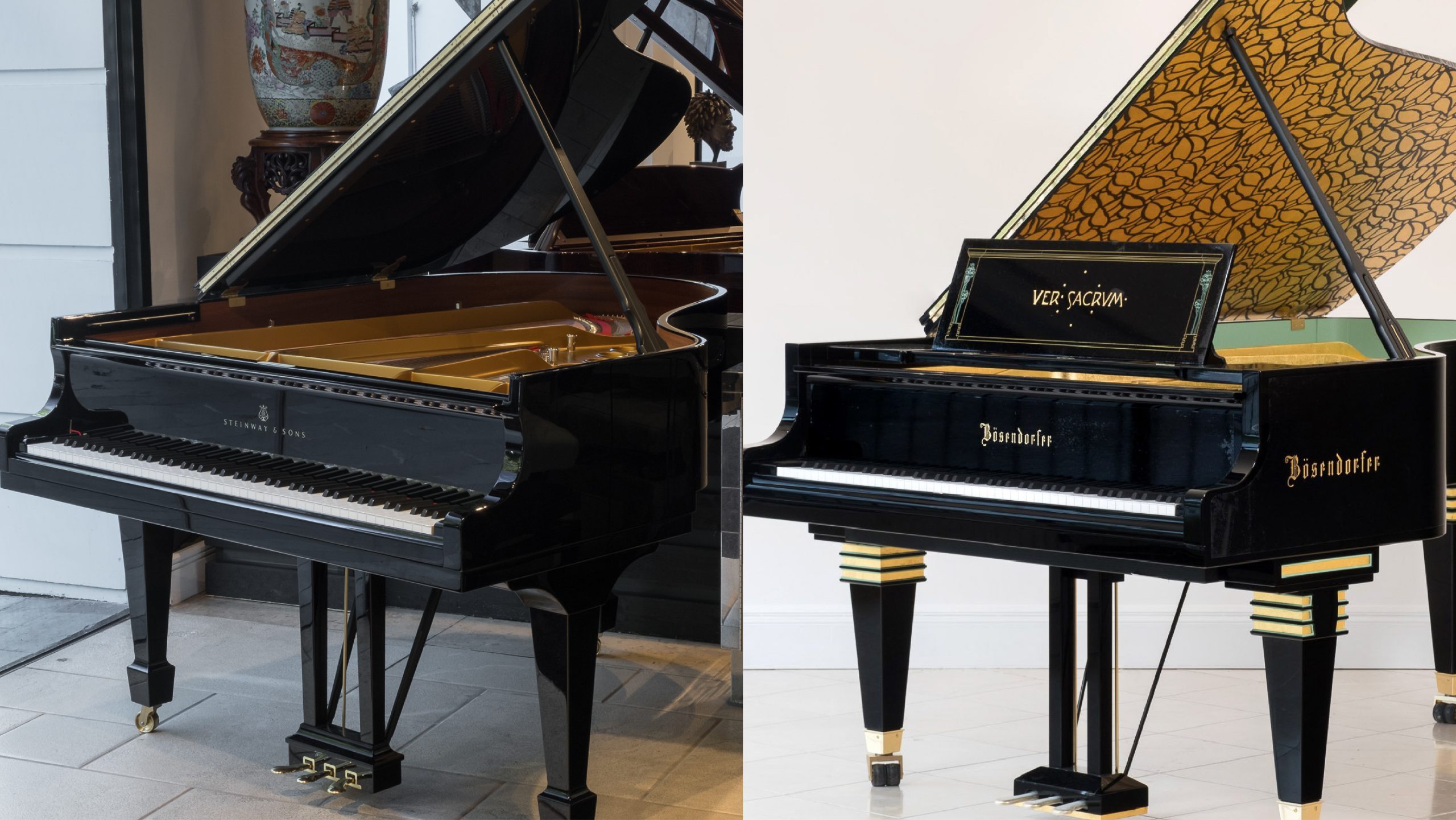
When it comes to the world’s most prestigious pianos, two names always rise to the top: Bösendorfer and Steinway & Sons. Both are revered for their craftsmanship, history, and distinctive sound, but many pianists ask us the same question: What are the key differences between Bösendorfer and Steinway?
In this guide, we’ll explore their origins, design philosophies, model ranges, pricing, and what makes each brand unique.
A Brief History of Two Legends
Bösendorfer
Founded in Vienna in 1828 by Ignaz Bösendorfer, the company has remained rooted in Austria ever since. Bösendorfer pianos were shaped by the fortepiano tradition of the late 18th and early 19th centuries, an era defined by composers such as Mozart, Haydn, Beethoven, Schubert, and Brahms.
Each Bösendorfer can be seen as part of this legacy, designed with sensitivity to clarity, warmth, and individuality.
Steinway & Sons
Steinway was established in 1853 in New York by Henry Steinway, originally Heinrich Steinweg, a German immigrant. Steinway pioneered innovations such as the cast iron frame, enabling greater power and projection. Their instruments became synonymous with concert stages worldwide, beloved by leading pianists for their strength, consistency, and projection.
Design Differences: Rim Construction
One of the most striking contrasts lies in how each brand constructs the rim of the piano:
– Bösendorfer uses solid spruce strips around 10mm thick, carefully grooved to enhance brightness and clarity, closer in spirit to the historical instruments of the Classical and Romantic eras.
– Steinway uses up to 20 layers of laminated wood, glued and pressed for rigidity. This produces a powerful, homogeneous sound that projects across large concert halls.
The result? Bösendorfer pianos are known for their warmth, singing treble, and unique character, while Steinways are celebrated for power, brilliance, and projection.
Production Scale and Rarity
Bösendorfer produces only around 300 instruments per year. Each is handcrafted and carries its own unique personality, making these instruments rare, highly collectable, and ideal candidates for restoration.
By contrast, Steinway produces a significantly larger number of instruments annually. While still handcrafted, their focus has always been on providing a consistent, powerful sound for the concert stage.
Range of Models
Steinway & Sons
– Upright: Model K
– Small grands: Models S, M, and O – suited for homes and teaching studios
– Medium grands: Models A and B – versatile for salons, schools, and smaller halls
– Concert grands: Models C and D – the Model D is the legendary choice for major concert venues
Bösendorfer
– Upright: 130 model
– Smaller grands: VC 170, VC 185
– Medium grands: VC 214
– Concert grands: VC 230, VC 280
– Imperial grands: The famed 225 and 290 models, with extra bass notes extending the range
Both brands cover everything from intimate salon instruments to imposing concert grands.
Pricing and Investment
While prices fluctuate, the two brands are broadly comparable:
– Uprights – Bösendorfer 130 upright from ~£48,000; Steinway Model K from £56,000.
– Smaller grands – Bösendorfer VC 170 and Steinway Model S from £95,000.
– Concert grands – Bösendorfer VC 280 around £185,000; Steinway Model D around £200,000.
Given their craftsmanship, rarity, and reputation, both brands are considered excellent long-term investments.
Which Brand Is Right for You?
The choice between Bösendorfer and Steinway often comes down to personal preference:
– Choose Bösendorfer if you’re drawn to warmth, clarity, and individuality—an instrument with character and rarity.
– Choose Steinway if you value power, projection, and consistency—especially if performance in large spaces is a priority.
Ultimately, both are among the finest pianos in the world. Experiencing them side by side is the best way to decide.
Experience Bösendorfer and Steinway at Coach House
At Coach House Pianos, we offer the rare opportunity to compare Bösendorfer and Steinway instruments under one roof. From pre-owned Steinway grands to new and pre-owned Bösendorfer models (including exquisite art-case designs), our showrooms in Swansea and London allow you to explore these legendary makers in person.
Book an appointment, meet our expert team, and discover for yourself which piano speaks to you.